MARKETING SUMMARY · SHEET 27/27 12.08.2026 TAKING ON PROJECTS
SHEET 27 · ONLINE SCHOOLS & EXPERTS · CASE STUDY TAKING ON PROJECTS

A children's course, turnkey, in 5 days: a team of AI agents launched the Financial ABC

An expert in children's financial literacy, Natalia Smagina, came to us with a task: help launch online learning for children and their parents. The input was her notes — six products by age and a list of topics. The output: methodologically sound programmes totalling 67 lessons, full scripts for the presenter, a brand identity built around a beaver-cub mascot, five educational cartoons, cards for children with QR-code audio, and a website that sells the course. A team of specialised AI agents did the work; a human approved every step. From the first request and brief with the expert to the turnkey launch took five days.

Launch your course Watch the cartoons →
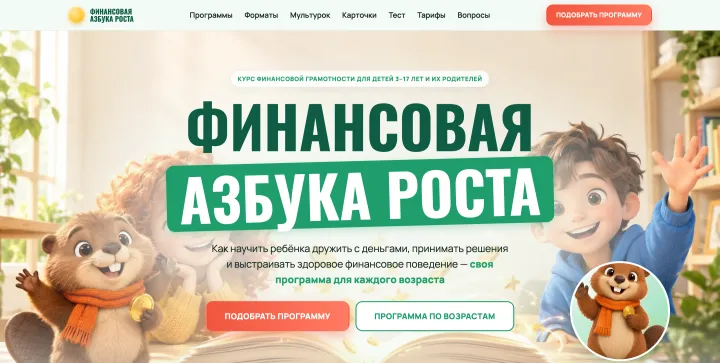
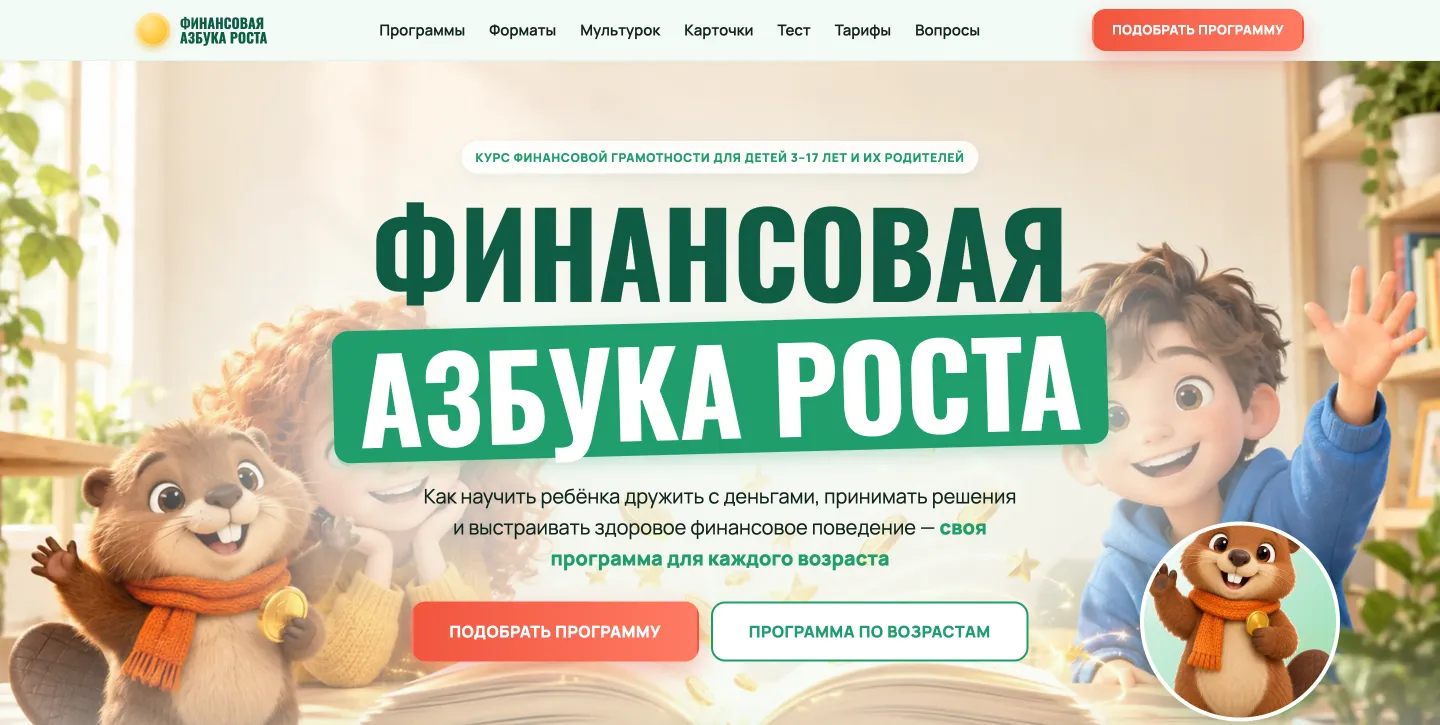
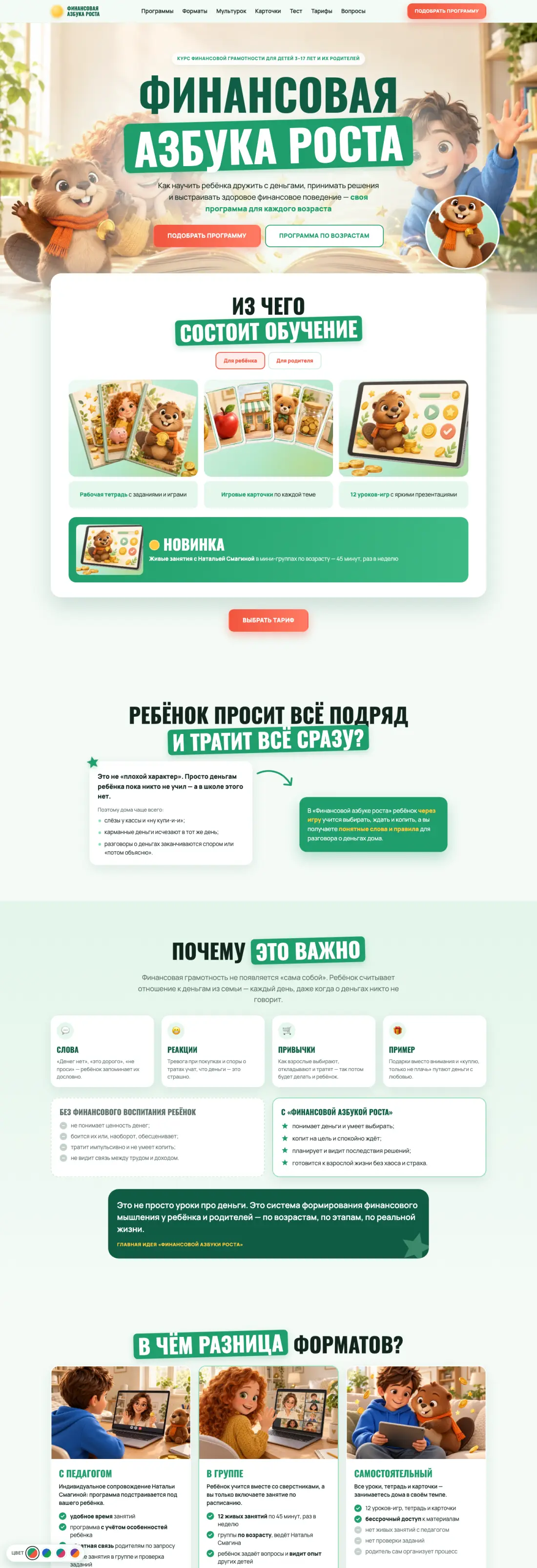
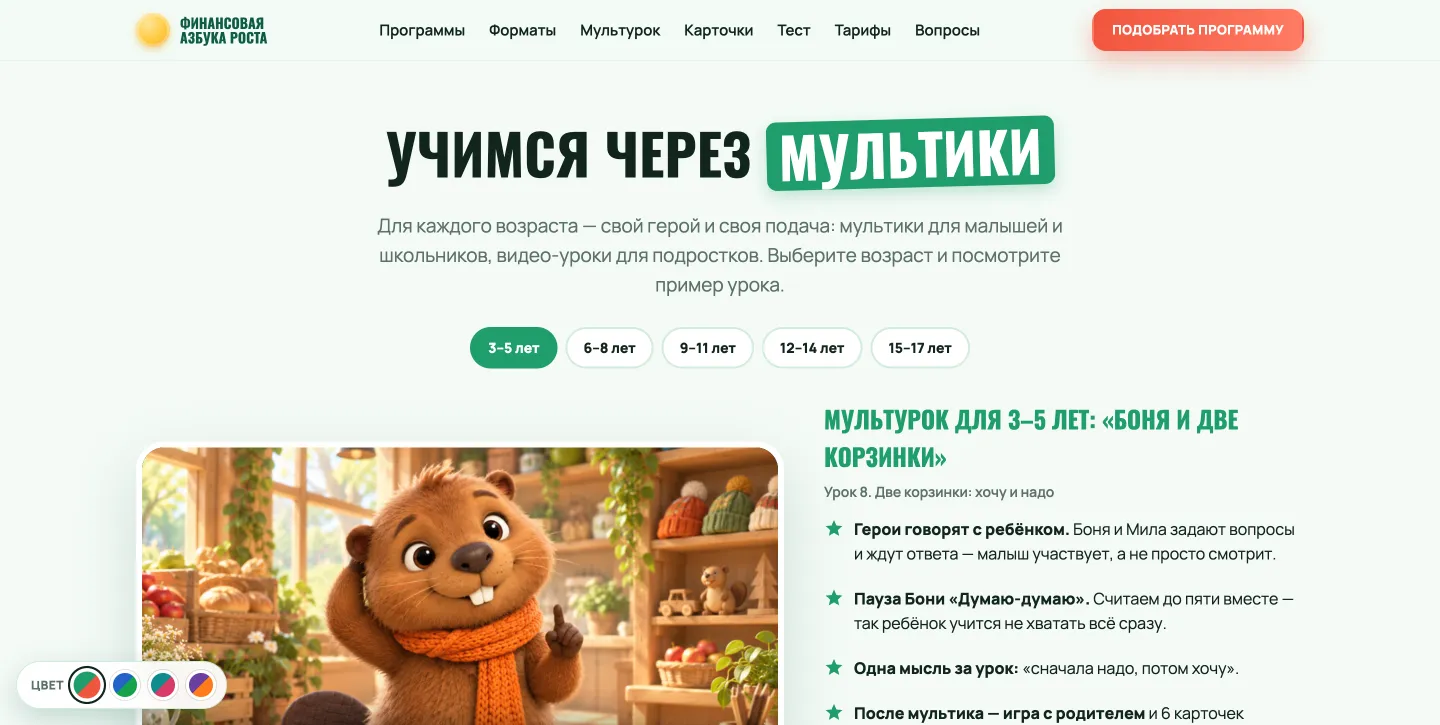
The Financial ABC course website: first screen with Bonya the beaver cub, Mila and Tima
The course website · the first version and three new palettes below ↓
THE TASKWHAT THE EXPERT BROUGHT

The expertise existed. The course did not

The expert knew what to teach children and had draft texts: a product for parents and five age stages from 3 to 17, each with ten topic cards and five assignments. Everything else an online school is made of was missing: programmes with a logic and learning outcomes, lesson texts, slides, video, handouts and a website to sell it all.

A launch like this usually takes months and needs an instructional designer, a scriptwriter, a designer, an animator and a web developer. We assembled a team of AI agents for those roles and ran the project through approvals: the next stage starts only when the previous one is signed off. The whole way from the first request and brief to launch took five days.

Brief → turnkey
launch
in 5 days

What a launch needsWhat existedWhat we built
THE TEAM7 AI AGENTS · 1 HUMAN APPROVES

A team of agents works on the course — each with its own role and deliverable

An agent is not “asking a chatbot”. Each one has its own instructions, methodological base, output format and review rules. Agents work in parallel: five instructional designers write five age programmes at once from a single brief while the designer prepares illustrations and the developer builds the site. The project lead merges the results and brings them for approval.

STAGE 1 · AUDIENCEONE COURSE — SIX DIFFERENT BUYERS

The parent buys, the child learns — so every age has its own pain point

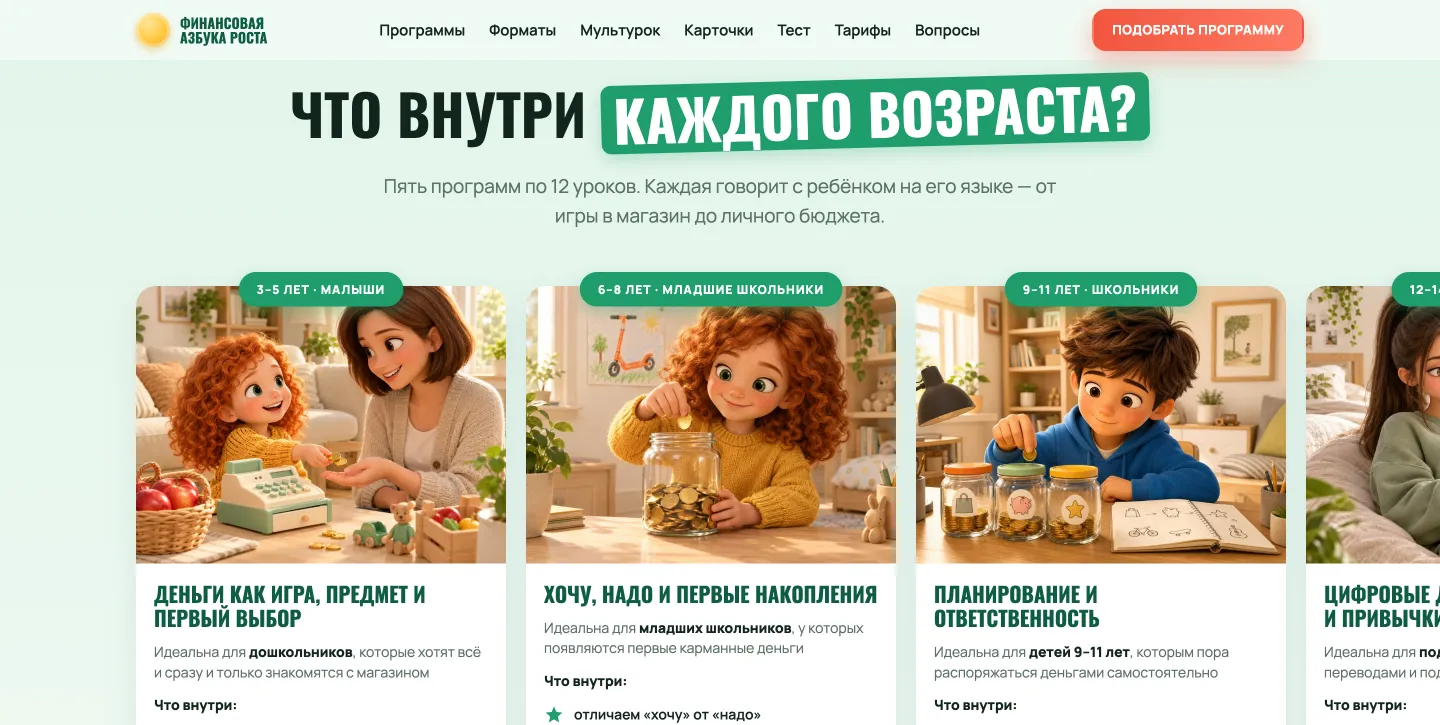
A “children's financial literacy course” is really six products with different buyers. The parent of a three-year-old is tired of tears at the checkout; the parent of a teenager fears “bank” scam calls and credit cards. For every stage the instructional designer defined the parent's pain point, the promised result (big promise), lesson length and a character the child can relate to.

The parents' programme is a separate product and the entry to the funnel: each of its lessons supports specific children's lessons, and its final quiz suggests which age programme to start with.

AgeParent's pain pointPromise
STAGE 2 · METHODOLOGYINSTRUCTIONAL DESIGNER + REVIEWER

A curriculum reviewed before the client ever saw it

Five instructional-designer agents wrote the five children's programmes in parallel; a sixth wrote the parents' one. A single brief set the frame: 12 lessons per age (the first an introduction, the last a celebration game with assessment), full coverage of every topic and assignment from the expert, and a game-based presentation, an assignment and home practice with a parent in every lesson.

Shared mechanics run through the whole course — so it feels like one story rather than six separate booklets:

The only low score in the second review was “production materials”, 2 out of 10: there were no cartoons or cards yet. That became the video director's job — see below.

STAGE 3 · SCRIPTS AND SLIDESSPEECHWRITER + PRESENTATION AGENT

The presenter opens the lesson and reads — nothing to improvise

The speechwriter writes the presenter's words verbatim: timed blocks, pauses, “show slide” cues, questions for children and what they are likely to answer. Plus “common difficulties and what to do”, a three-question mini-quiz with answers, a one-page cheat sheet for the parent and a presenter's pre-broadcast checklist. For toddlers, a parent can read the text.

Every lesson in the curriculum describes a game-based presentation: what is on each slide and what the interaction is. The presentation agent builds the slides from that description in the course style — with the same characters, palette and coin motif as the site and the cartoons.

STAGE 4 · BRAND IDENTITYDESIGNER AGENT

One hero for the whole course — from the website to the card on the fridge

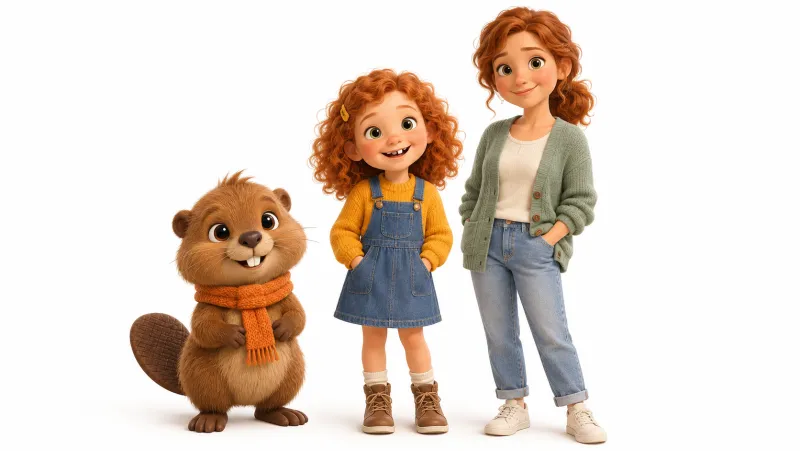
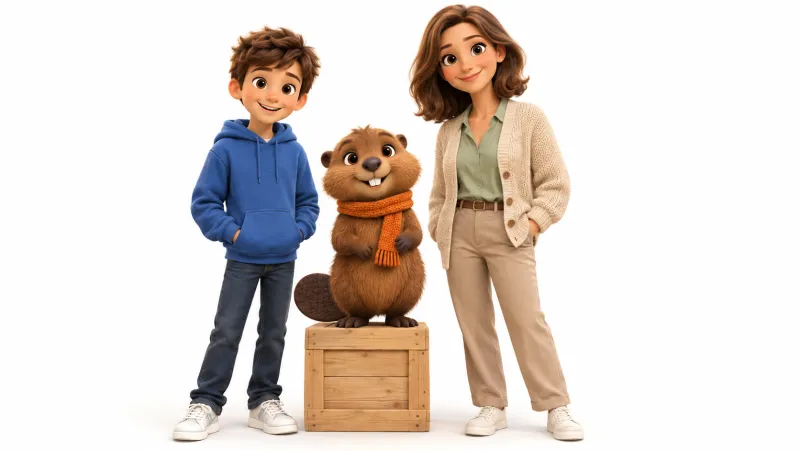
The course mascot is Bonya, a beaver cub in an orange scarf holding a gold coin. It's no accident: a beaver builds its dam twig by twig, to a plan — exactly how we teach children to save. The metaphor works at every age: toddlers get a dam of stickers, teenagers get a beaver badge in the corner of the slide that lights up for each completed step of the plan.

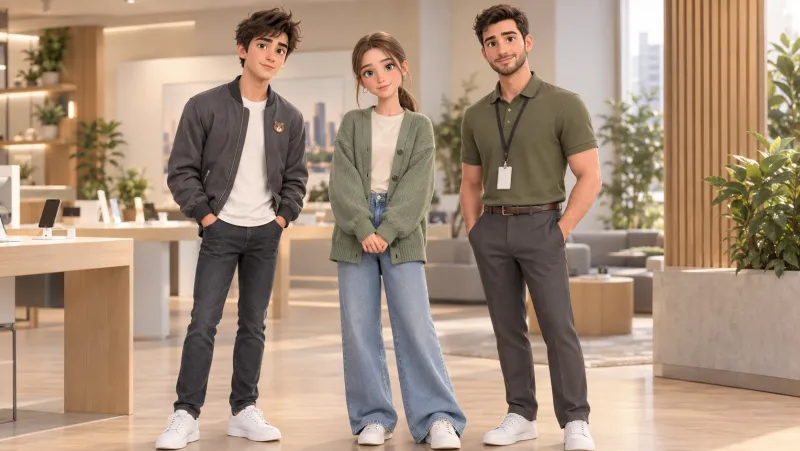
The characters “grow up” with the programme: Mila is 4 in the 3–5 lessons and 7 in the 6–8 lessons, Tima is a 9–11-year-old, Liza and Artyom are teenagers. The designer fixed the palette, fonts and illustration style in a brand book and repeats it in every prompt — so site images, cartoon frames and cards look like one series.

STAGE 4½ · DESIGN VERSIONSDESIGNER + DEVELOPER · THE EXPERT CHOOSES

The team built the site in several palettes — the expert only had to choose

The first version of the site was violet and orange, and the designer drew every illustration in the same tones. When we decided on a lighter, calmer palette, nothing had to be redone from scratch: the designer regenerated the illustrations in a neutral cream palette and the developer built three new design versions on one site — “Mint & coral”, “Sky & grass”, “Teal & raspberry”.

Every version is finished and switches with one button — the expert simply looked at them on the live site and chose “Mint & coral”. The first, violet version wasn't lost either: it stays in the switcher together with its own illustrations.

STAGE 5 · EDUCATIONAL CARTOONSVIDEO DIRECTOR AGENT

Five cartoon lessons — one for every age

For each cartoon the video director takes a lesson from the curriculum and its main idea. The scriptwriter writes 11 scenes of 13–14 seconds with the characters' lines — short, so children can repeat them. Toddlers get no subtitles or on-screen text: they can't read yet, so the characters speak. The cartoons are in Russian.

The hardest part of AI animation for children is keeping the character in scene five the same as in scene one. So the work starts not with frames but with a character sheet: each character's look, clothes and voice are fixed on one sheet and passed into every scene.

The videos are shown in 480p demo quality so the page loads fast. For the course platform the same films are rendered in high resolution.

STAGE 6 · CARDS FOR CHILDRENVIDEO DIRECTOR + DESIGNER

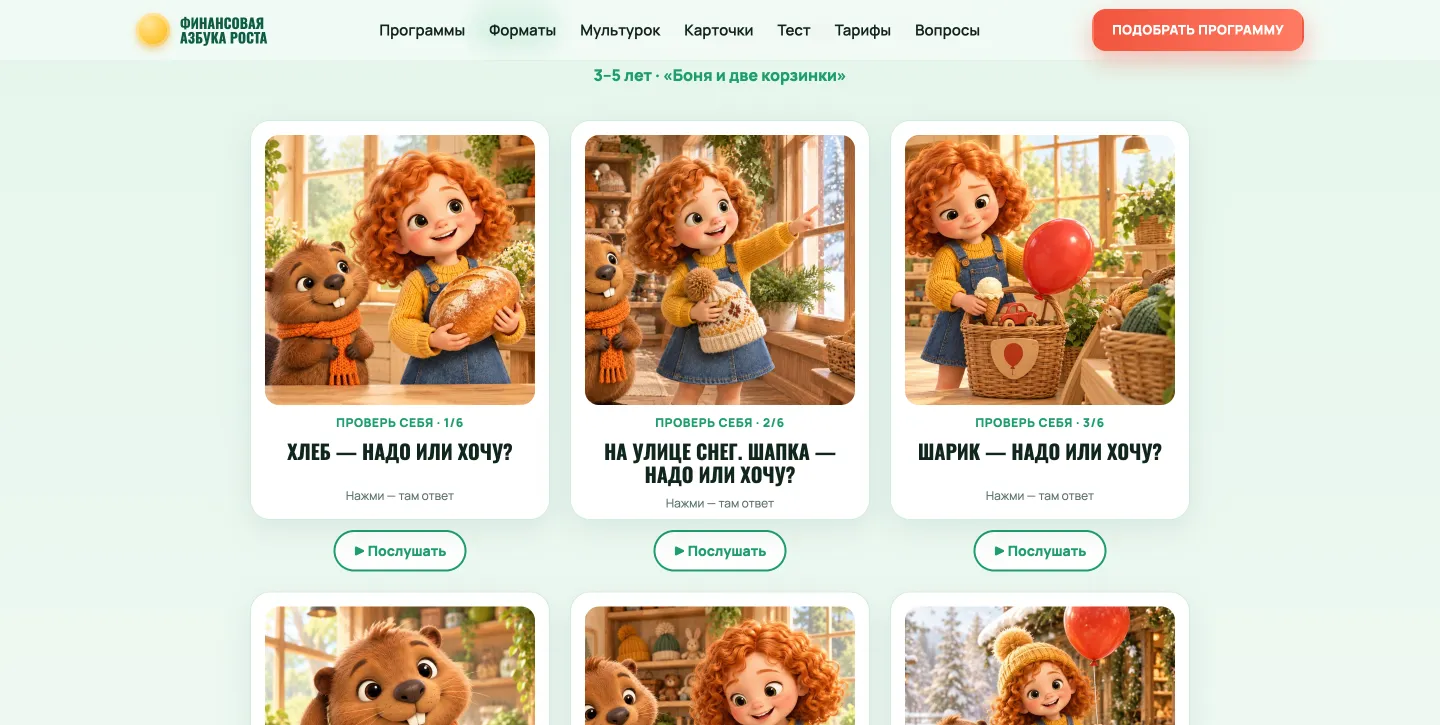
“Check yourself!” cards: a question, an answer and the character's voice via QR

Each cartoon comes with six cards. The front shows a frame from the cartoon and a question (“Bread — need or want?”, “The ‘bank’ asks for the SMS code. Do you read it out?”); the back has the answer, a tip for the parent and a QR code. Point a phone at it and the character says the answer — the line is cut from the cartoon using exact speech-recognition timestamps.

The cards work in two places: on the site as flip cards with a “Listen” button, and as an A4 PDF with mirrored backs so front and answer line up in double-sided printing. Every QR was checked with a scanner. Extra generation cost: zero — everything was built from finished frames and lines.

STAGE 7 · COURSE WEBSITEDEVELOPER + REVIEWER

A website that sells the programme to the parent of a specific child

The course site is built as a funnel: the parent recognises their situation, picks an age, watches a cartoon lesson and the cards, takes the quiz — and gets a recommendation of which programme to start with. The copy is original, from the expert's materials; testimonials were deliberately left out at launch.

Demo: finazbuka.demo.socode.ru (in Russian)

RESULTWHAT THE EXPERT GOT

What this gives an online school or an expert

HOW WE WORKAPPROVAL AT EVERY STEP

We'll build your course, turnkey

Tell us what you teach and to whom. We'll review your materials for free and propose an agent team, a timeline and an estimate — no obligation.

Discuss your course