01 · PARSER
Exported the old site
Done: 265 pages, 44 unique products, all photos and prices.
Below are extracts from real 2026 engagements. Every figure comes from an ad account, a CRM or a bank statement — which is exactly how it reaches client reports signed by the agency.
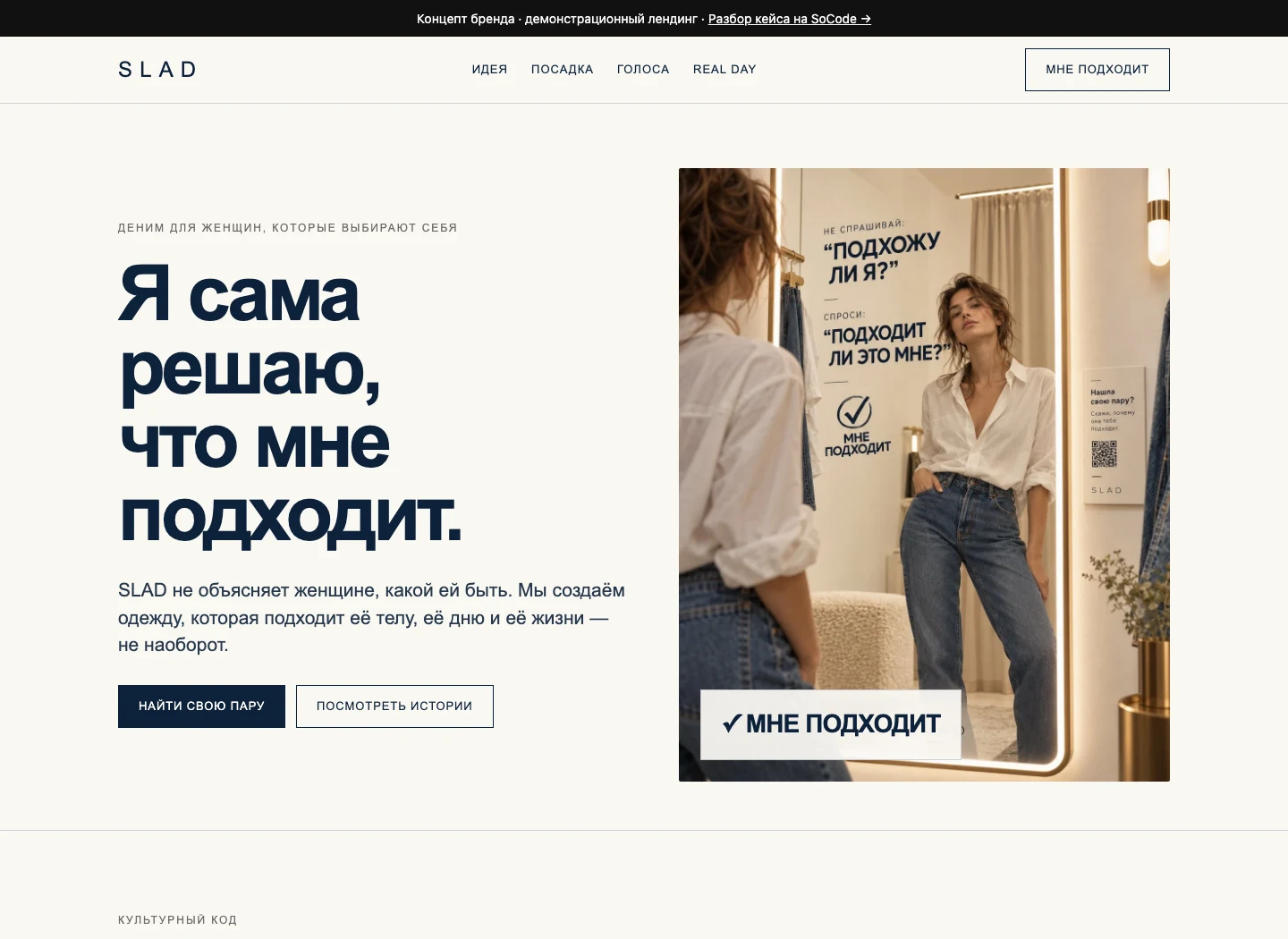
A pilot concept for an existing denim brand. Product fit becomes evidence for a broader cultural idea: the woman chooses clothes for her own body and life. The brand offers a reusable language of personal choice.
Client brief: Deepen the meaning of SLAD and connect clothing, freedom of choice and customer participation in one brand system.
Pilot concept; no launch or performance results are claimed.
A skincare brand concept for ages 15–18. The brand focuses on how skin feels today and provides a simple base routine and an open language. The colon lets the audience complete the name with their own status.
Client brief: Create a youth skincare brand concept from scratch, from positioning and naming to product logic, visual language and participation mechanics.
Pilot concept; no launch or performance results are claimed.

An online store selling professional cosmetics. Campaign management and audit: clearing out dead keywords, switching off junk display placements and moving budget into the strong segments — abandoned carts and past buyers.
Best segments: carts at 4.3% cost of sale, past buyers at 3.5%. The audit found a further ≈₽43,000 a month in losses.
Professional hair care. The SEO audit showed that 65% of the links in the sitemap returned 404 — for months, crawlers had been walking pages that no longer existed. A parallel review of the ad account found budget draining into junk display inventory. Both reports came with a 30-60-90 plan.
A fitness studio in Saint Petersburg. We finished the website (speed, contrast, calls to action, responsive images), launched Yandex Direct from scratch, connected online payments with SMS notifications, and set up offline conversion upload into analytics — so automated bidding learns from real sales rather than clicks.
Our own school teaching AI tools runs on the same stack we sell: webinar funnels in the LMS, traffic from paid search, follow-up sequences and a dashboard where revenue is reconciled against the bank and net profit is calculated by formula rather than by feel.
net = (revenue − payment fees) × 0.88 — the formula from our own dashboard.
Our content generation service is run by agents: the support agent answers customers with drafts approved over Telegram, an SEO agent built dozens of landing pages and a 50-lesson course, and a marketing agent optimises the ad account every day. All of it is process we then transfer to clients.
A full-day private school in St Petersburg with three campuses. The audit scored it 3.3 out of 10: robots.txt blocked almost the entire site, the sitemap listed two URLs instead of the real structure, the personal-data consent link under every form returned a 404, and the mobile homepage carried an uncompressed 8.3 MB image. In the same run we did not just document the problems — we rebuilt the site against that list: 29 static pages instead of WordPress on PHP 7.1, the mandatory «About the educational organisation» section with 147 documents, and a low-vision mode.
LCP measured with Lighthouse on a mobile profile, slow 4G and 4× CPU throttling. Demo version: bwschool.demo.socode.ru
From a single photo of the bottle and a short product description, our API assembles a set of listing images in one brand style: a cover, a benefits infographic, specifications, an in-use lifestyle shot and a close-up. The bottle, label and logo look exactly as in the source photo on every frame — the model does not redraw the product. The Russian copy on the images is taken word for word from the product data: no “clinically proven”, no prices, no promises that aren’t in the description.
The client writes no prompts — only the name, benefits and specifications. A cream gets its own specs, a shampoo its own: the template inserts exactly what was sent, and a frame with no data is skipped rather than filled with invented text. That is why the same set scales to a whole catalogue — through the Genosai API or an MCP agent in Claude or Cursor that works through the products on its own.
The LUMA brand and product are for demonstration; the bottle photo is generated too, to show the pipeline at work. In a client project the input is the client’s own photo and product listing.
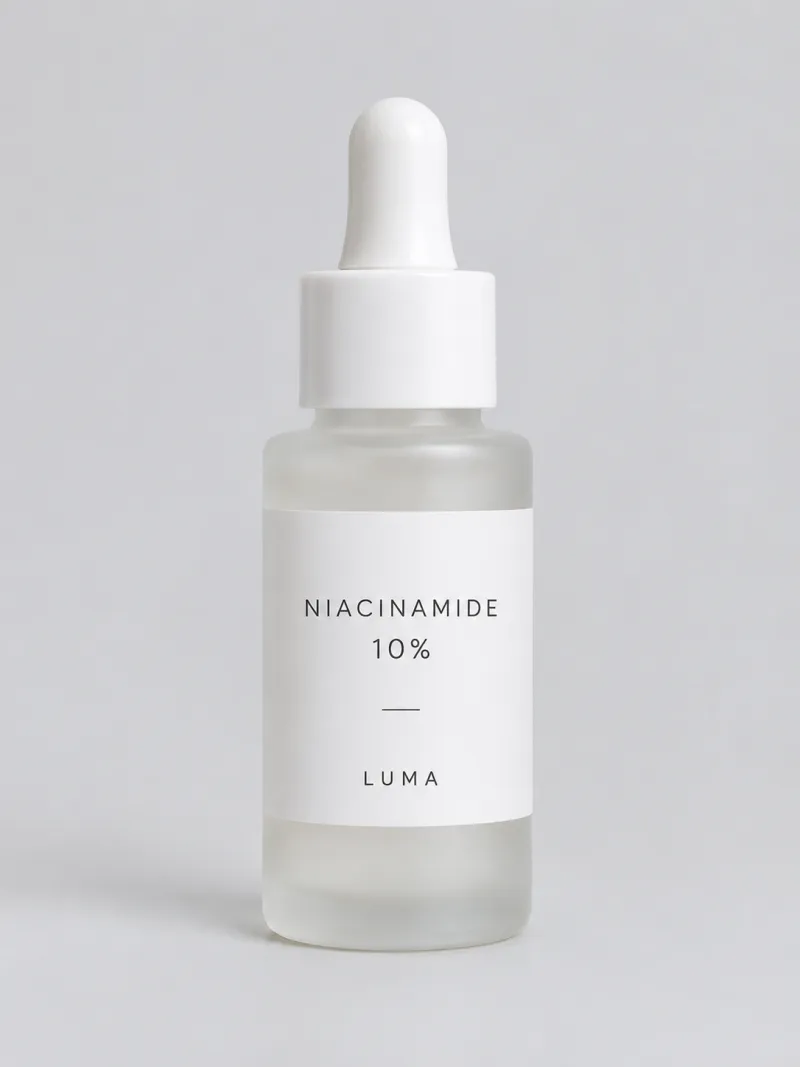



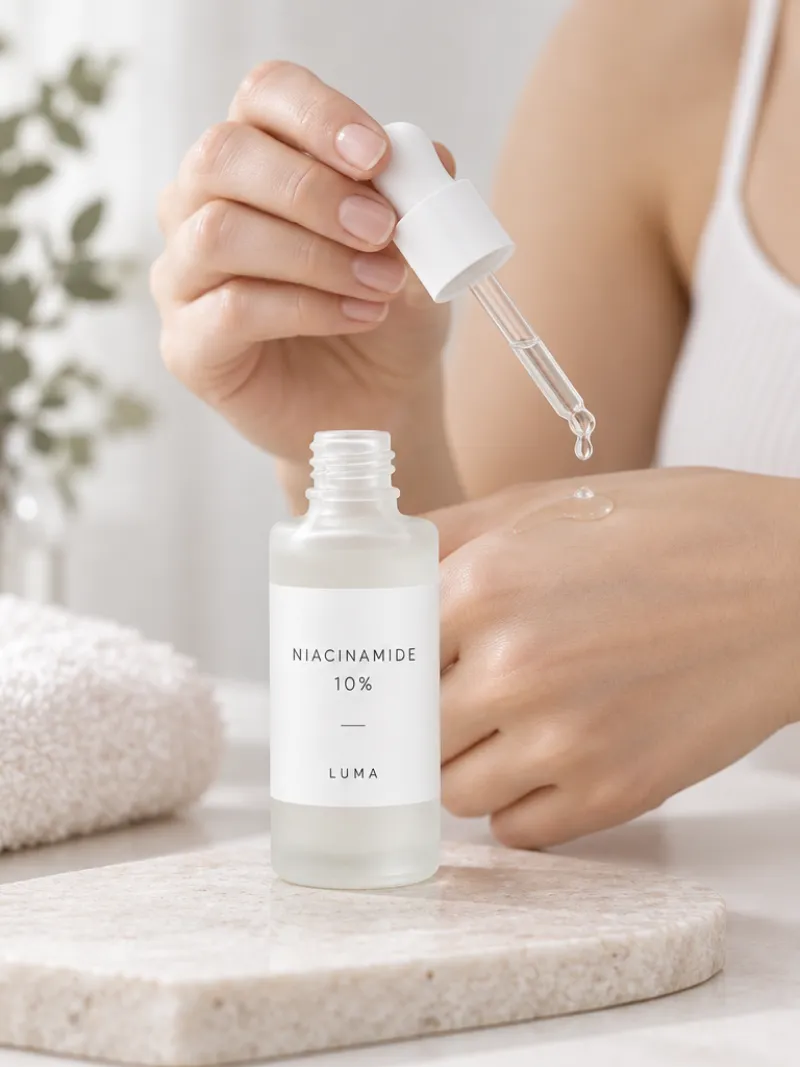

The master image is the product’s first picture. It is the only one a shopper sees in search results next to dozens of competitors, and it decides whether the listing gets opened at all. That is why conversion work starts with it, not with the rest of the set.
This is the brief marketplace brands bring us: automate listing images and keep testing which one performs best. For it we build a machine on our API: an admin panel inside the client’s site, variant generation, publishing to Wildberries and conversion tracking. Hypotheses are tested non-stop: the winner stays in the listing, the loser makes way for the next idea.
In the admin panel on the client’s site. Nothing else is needed: product data comes from the catalogue.
Via the API — several master images, each a different hypothesis: calm premium, bright, high-contrast.
The variant goes into the listing through the marketplace API, no manual uploads.
The system reads the listing conversion, keeps the winner and uploads the next variant.


Illustrative example: the percentages show how the machine reads a round’s result and are not measurements from a real client — LUMA is a demo brand. In a project the figures come from the client’s own Wildberries account. The admin panel and WB publishing are built to order, around the brand’s catalogue and processes.
An expert in children's financial literacy came to us to launch online learning for children aged 3–17 and their parents. A team of seven AI agents — instructional designer, speechwriter, presentation agent, designer, video director, developer and reviewer — built the programmes with lesson-by-lesson scripts, a brand identity with a beaver-cub mascot, five educational cartoons, cards with QR audio and the course website. Every stage went ahead only after the expert approved it.
A follow-up to CASE 03. The studio was leaving a cloud booking service: it needed its own payroll schemes, room limits, a multi-service visit on one receipt and client data in its own database. From the owner's 21-minute video the agent produced a 67-item spec, and we built a CRM the team found familiar. Then we added a Change Center to the admin panel: the owner and front desk write a task with a screenshot, the developer agent makes the change in minutes, and the team accepts it or sends it back.
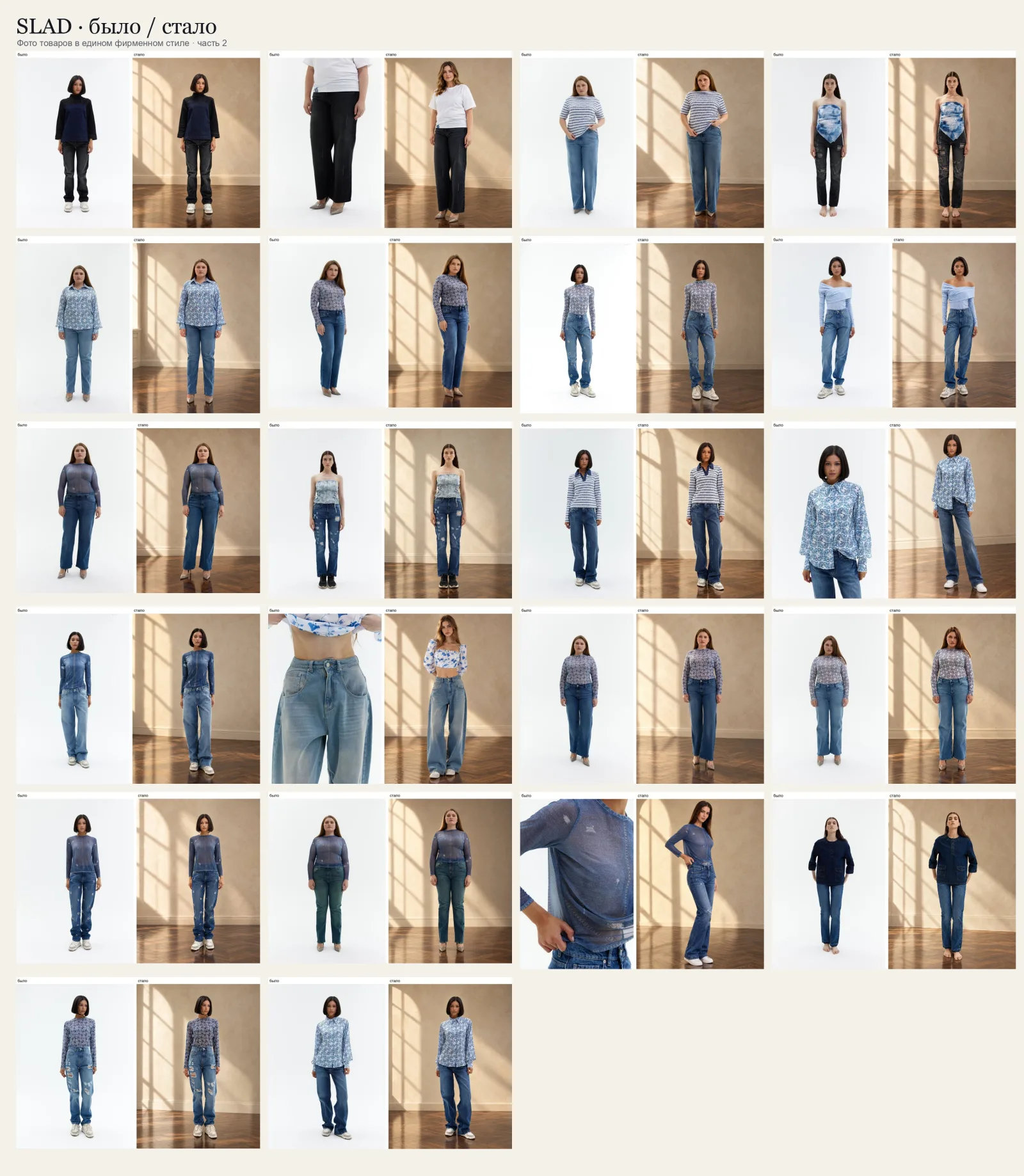
A premium denim brand from St. Petersburg. The old website sladbrand.ru did not sell: the SEO audit scored it 3.3 out of 10. An entrepreneur with no AI experience dictated the task in three voice sentences. Gena, the orchestrator agent, translated it into prompts, estimated the cost and assembled a crew of eight agents on his own.
In one evening: a new selling website, 33 catalog photos in a single brand style, a 10-shot lookbook with no studio, model or photographer, a carousel for Instagram and VK, a 24-page SEO audit and a commercial proposal.
Open the new website → SEO audit of the old site — PDF, 24 pages, in Russian ↓
THE TASK — VERBATIM, AS DICTATED (TRANSLATED)
“sladbrand.ru. Gena, do an SEO audit of the site, call in the marketer, work on the messaging — what needs to change so the site sells as hard as possible. Prepare the audit and a commercial proposal. Make her a proper website, a beautiful one. Take everything that's on this site. If there aren't enough images, create them yourself.”
“Then: create 10 fashion photos. Don't change the face; the clothes can change — with the jeans from the site.”
“And finally, in Genosai, with the same photo of her: make a selling carousel. Why do you need denim skirts? […] Make it really beautiful, so you want to buy.”
HOW THE AGENT TURNED IT INTO A PROMPT (EXCERPT)
Reproduce her face one-to-one from that reference: identical facial features, eyes, nose, lips and smile, the same thin round metal-rimmed glasses… Do NOT alter, beautify, slim, de-age or stylise her face in any way. Look: the exact deep cobalt-blue straight-leg SLAD jeans from the second reference image…
The spoken “don't change the face” became hard constraints for the image model — that's why every shot shows the same person and the jeans match the products on the site.
Gena decided who was needed and handed out the tasks. The human only dictated the task and accepted the result.
01 · PARSER
Done: 265 pages, 44 unique products, all photos and prices.
02 · SEO AUDITOR
Done: 270 pages, 20 speed tests, Wordstat demand. A 24-page report: 3.3 of 10 and what to fix first.
03 · MARKETER
Done: “SLAD. Jeans that fit” — the core message of the new site.
04 · WEB DEVELOPER
Done: A selling site based on the old catalog, published at a demo address.
05 · PHOTO EDITOR
Done: 33 product photos moved into one brand scene: ivory, arched window, parquet.
06 · PHOTOGRAPHER
Done: The face matches the reference photo, the jeans are exact copies from the site. No studio, model or photographer.
07 · GENOSAI CAROUSEL
Done: 7 slides with text rendered into the image: from the cover to the “Buy” button.
08 · SALES MANAGER
Done: Prepared the commercial proposal and sent the audit and the site to the client.
Product photos on the old site were shot on different backgrounds and in different light. The photo editor moved all 33 shots into one brand scene — the person and the garment stayed the same.
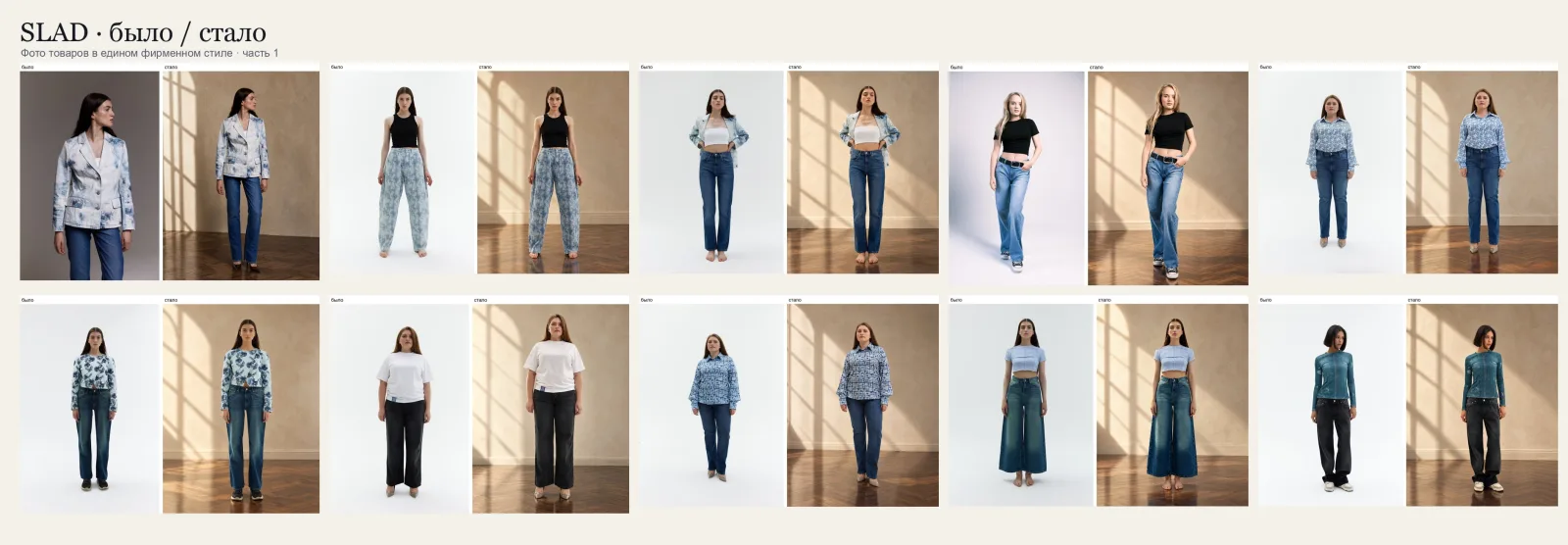
One reference photo and jeans from the catalog. Studio, city, embankment, loft — all generated, no model or photographer fees.

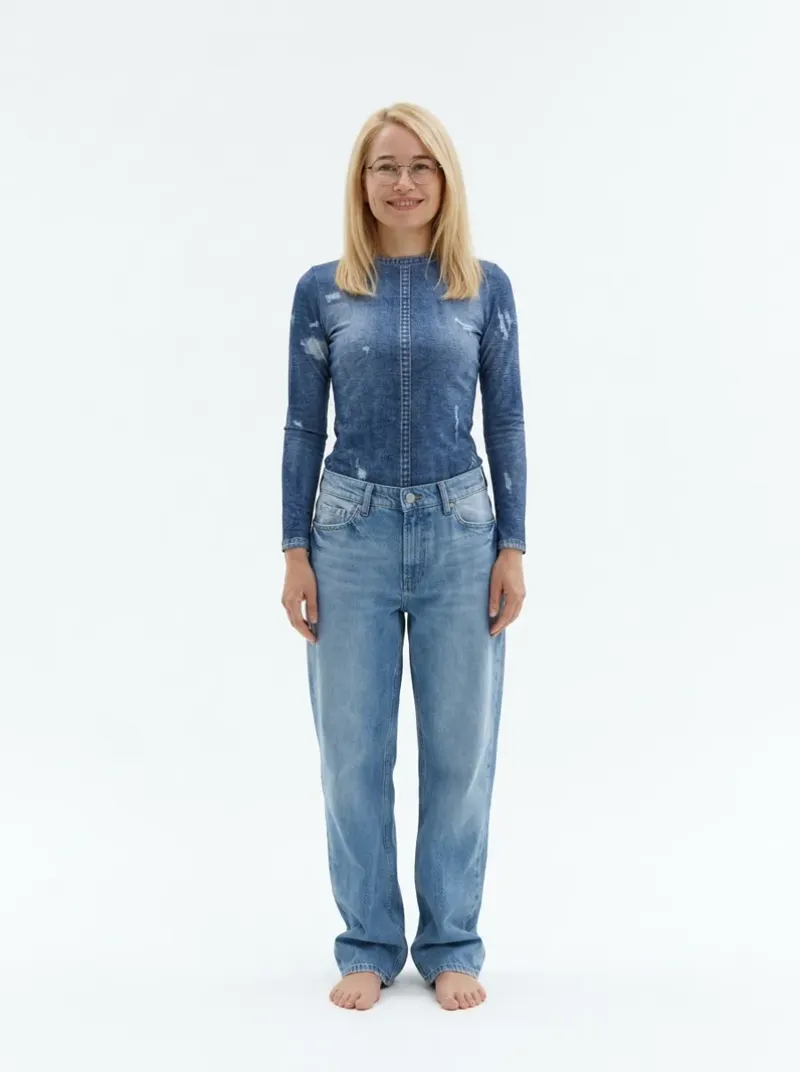






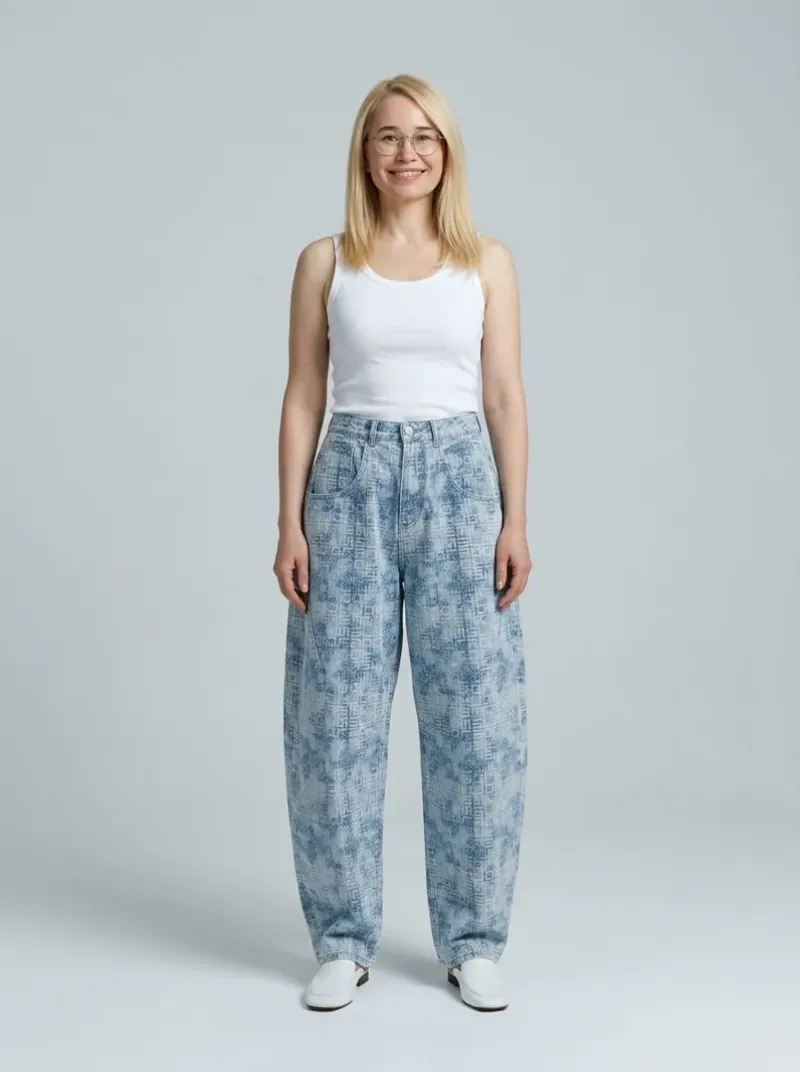

From the same single photo — 7 slides about denim skirts. The text is rendered into the image, no separate designer needed.








The new site is a demo built by the agents from the brand's catalog. The lookbook and carousel were generated from a single reference photo; the garments are products from the SLAD website.
The owner had built a voice assistant prototype in Google AI Studio and dictated the task: take the code, connect the new Gemini model, launch it on his own domain, create a bold landing page with a login and role settings — name, description, script, voice and knowledge base. The developer agent pulled the source straight from the browser, rewrote the server side, deployed the app on a server in the Netherlands (the Gemini API does not serve Russian IPs) and pointed the subdomain in the hosting panel itself.
In parallel, a research agent studied the market for voice agents and AI coaches and assembled 10 roles with instructions and knowledge bases, while a knowledge agent packed Anton's AI-agents course materials into a voice expert. Every role speaks first, answers from its own knowledge base and, after the call, saves the audio recording, transcript and a summary with action items. Coaches give a score and name areas for growth.
THE TASK, AS DICTATED (TRANSLATED)
“Download all the code from the browser. The Dobby assistant app. Connect the Gemini three-eight live model to it, carry over all the settings and launch it on my site, dobby dot bogatushin dot ru. Give it a really bold, interesting landing page with a ‘Log in’ button… Inside, all the roles, so I can set the agent's name, description, how it works, pick a voice and upload a knowledge base.”
“Be sure to test the mobile and desktop versions yourself… Set up ten important roles. Look online at which coaches are in demand and which voice agents are used most. And make one agent based on Anton Bogatushin's course.”
HOW THE AGENT READ IT
“Gemini three-eight live” — the gemini-3.8-live model for real-time voice; summaries run on gemini-3.8-flash.
“Launch it on my site” — a subdomain in the hosting panel, with the app itself on a server abroad, because the Gemini API does not answer Russian IPs.
“Ten important roles” — market research: agents for booking, support, lead qualification, win-back and HR screening; coaches for sales, interviews, English, negotiation and the “difficult customer”.
The agent ran the voice test itself: using a synthesized voice it asked the course expert about pricing and got the correct spoken answer — from the knowledge base, nothing made up.




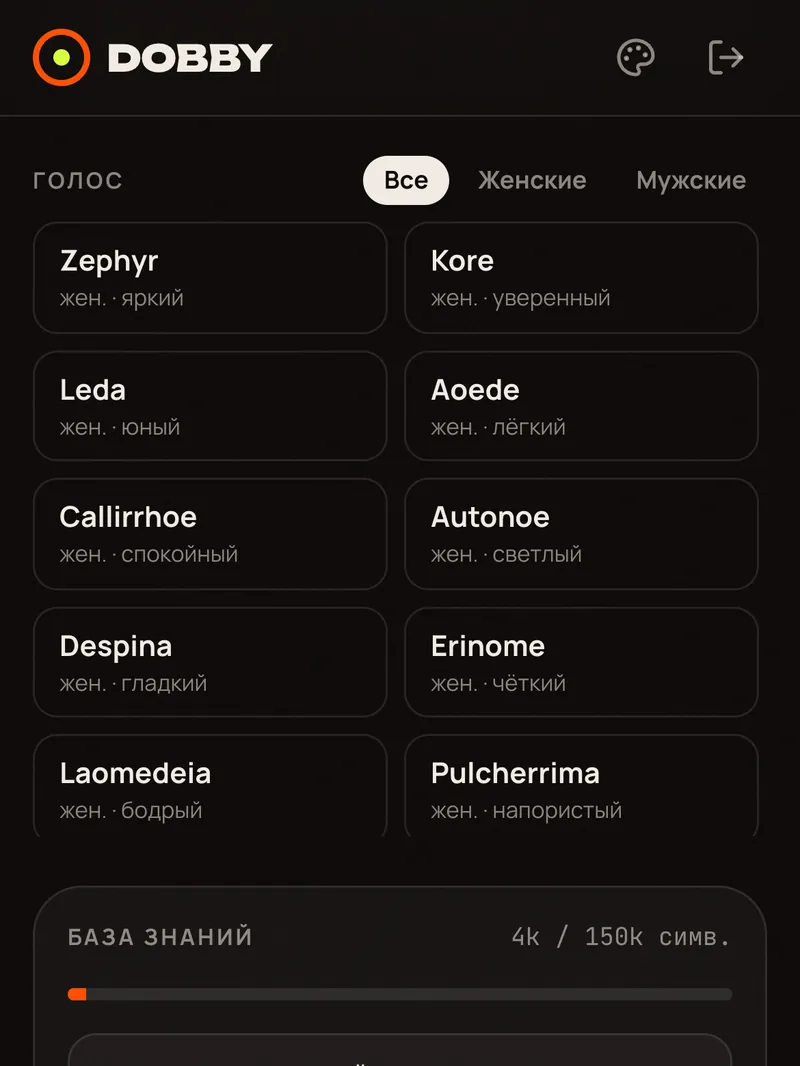
The app is behind a login; the landing page is public. The interface is in Russian. Business agent roles are filled with sample companies: before launch, a client's price list, policies and scripts replace their knowledge base.
Start with a free express audit — within 48 hours you’ll have the first real numbers about your own marketing.
Request an audit